The Missing Backstop: Protection for the Onchain Yields

Robinhood Earn represents the flagship example of offering the off-bank yield to mainstream retail. The platform promises a self-custodied 7% yield on Paxos-issued USDG directly within its app interface, and an insurance wrapper anchors the consumer proposition. Read the underwriting disclosures, however, and there is a bit of a surprise. Underwritten by Lloyd's and Relm, the policy covers cyber incidents and smart contract exploits, but explicitly states it "covers Robinhood; it is not a personal policy for you and does not give you a direct right to make a claim." Robinhood further warns that the product acts as "not a substitute for FDIC insurance."
Defining the actual limits of traditional deposit insurance helps to provide the analytical baseline for this discussion. Backed by the federal government, the FDIC explicitly covers institutional failure, capping at $250,000 per depositor per ownership category. Crucially, the deposit guarantee explicitly excludes theft, fraud, and investment losses. Safety inside the traditional banking system already exists as an unbundled stack of distinct, separately priced products, with the FDIC supplying only the institutional failure layer.
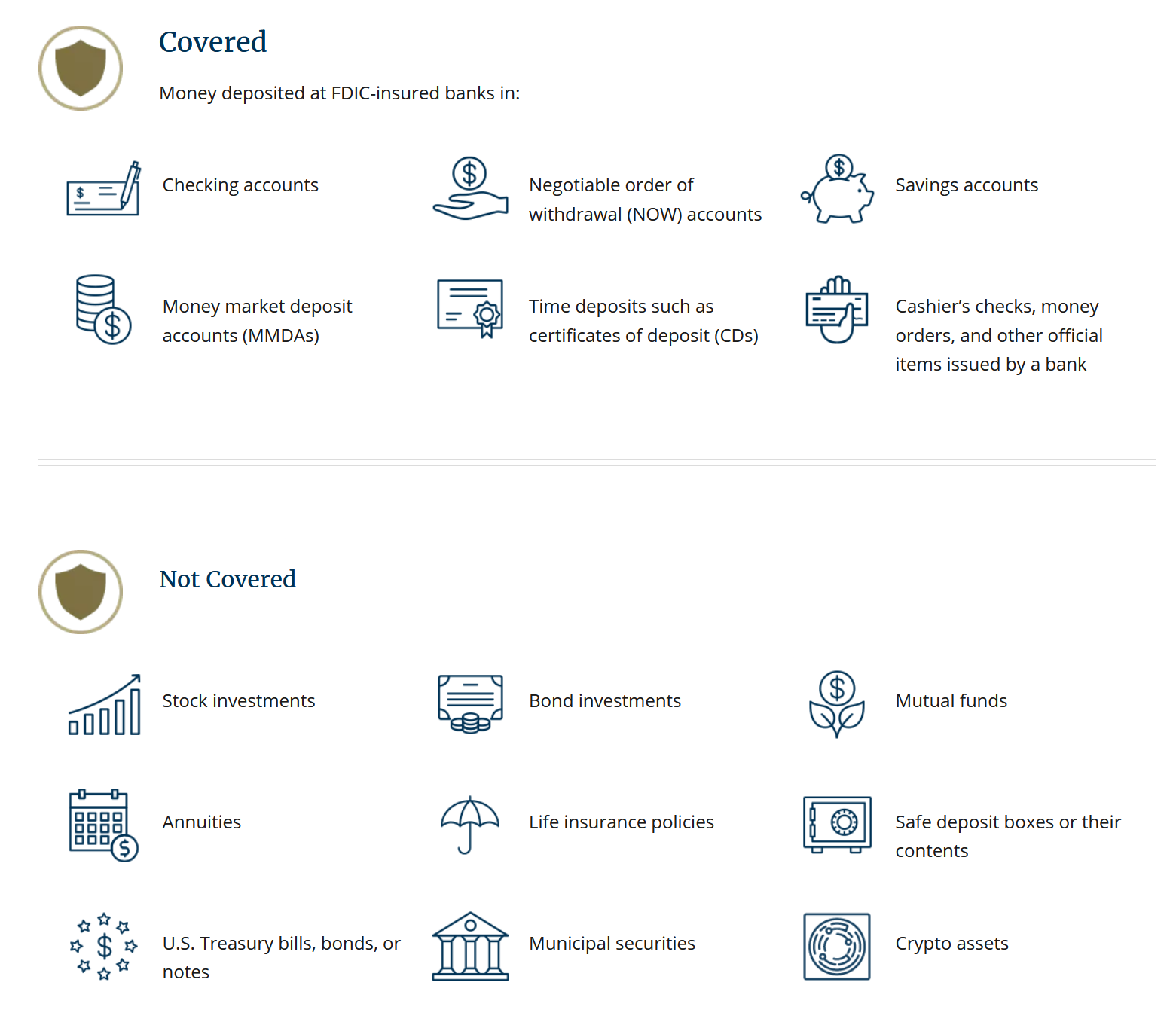
Our previous memo mapped the migration of yield opportunities from banks to onchain rails. Moving capital into stablecoin structures, however, strips away the TradFi deposit guarantee. Regulatory bodies confirm this architecture, explicitly stating that reserve assets backing a payment stablecoin protect the token's peg. Reserves do not insure the saver against loss on a pass-through basis; instead, the saver inherits issuer credit risk, alongside structural risk from lacking a direct liquidation claim on the underlying assets.
Hugh Karp, founder of Nexus Mutual, the largest onchain insurer, diagnosed the resulting deficit bluntly in a May 2026 interview with CoinDesk: "Less than 2% of DeFi's TVL is covered or insured, and we see that as one of the largest barriers to real DeFi adoption." Yet, operating an under-insured ecosystem does not represent a uniquely crypto pathology. As an example, Swiss Re data documents a $424 billion global natural catastrophe protection gap for 2025, with nearly 75% of global catastrophic exposure completely uninsured. Even the capital-rich TradFi routinely leaves correlated, data-poor perils exposed.
Traditional finance treats financial safety as three separately priced risk-transfer mechanisms; priced off the far tail rather than based on the average loss. Onchain ledgers in principle possess the capability to replicate this exact capital stack for protocol perils at low basis point costs. Achieving this parity, however, demands absolute honesty regarding the correlated, systemic tail risks that remain structurally uninsurable.
Pricing Safety Requires Underwriting the Tail
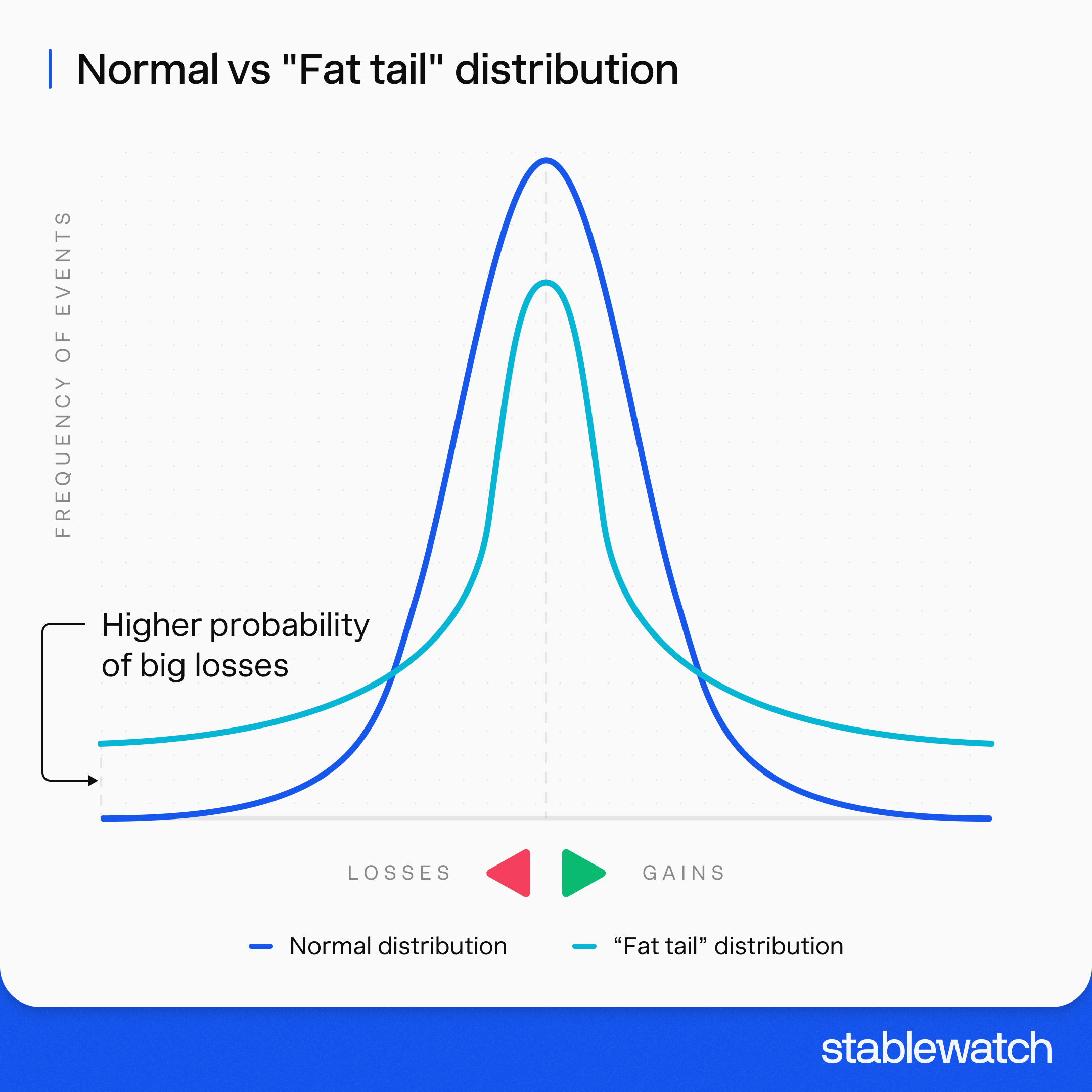
Mature financial architecture treats safety as a layered stack of distinct, separately priced risk-transfer mechanisms. At the base sit fidelity bonds and commercial crime cover, the insurance a bank or brokerage buys to protect itself against theft, fraud, and embezzlement, whether by a rogue employee or an outside criminal. This is the layer that pays when money simply goes missing. Because such events happen often but rarely threaten the whole institution, insurers hold decades of loss data on them, the risk is well understood, and the cover is correspondingly cheap.
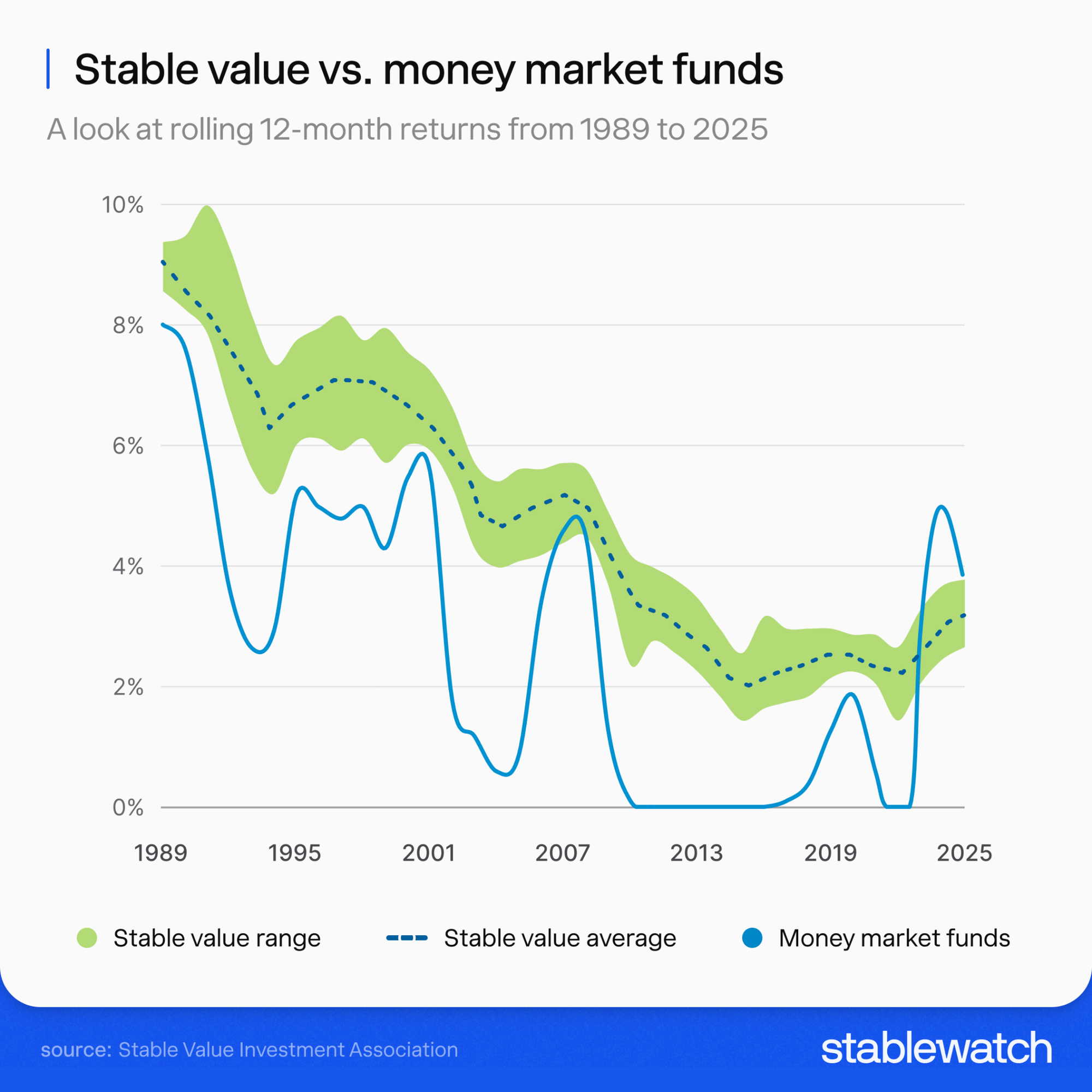
Return guarantees are another category. A Guaranteed Interest Contract (GIC) is a promise, usually sold by an insurer to a retirement plan, to hand back the money invested plus a set rate of interest, regardless of what markets do in between. Stable value funds package the same guarantee for the everyday saver in a 401(k). The saver's balance only ever moves up, at a steady "book value," even in years when the bonds behind it fall. Standing behind that promise works nothing like ordinary insurance, which relies on pooling many unrelated risks so losses average out predictably; few houses burn down in the same year. A rate guarantee cannot be spread this way, because when interest rates jump, every contract is underwater at once. So the provider cannot lean on a pool at all; it must set aside dedicated capital and actively hedge the underlying bond portfolio to be sure it can pay.
Structural subordination acts as the final mechanism. Tranches, catastrophe bonds, and reinsurance layers aren't really insurance policies; they are ways of stacking capital so that some of it is contractually first in line to absorb a loss, shielding the capital behind it. The insurer you buy a policy from covers losses up to a limit; behind that insurer sits a deep global reinsurance market, effectively insurers for insurers, whose capital is only touched once a catastrophe is large enough to burn through the primary layer. Each layer sells the one above it protection from the tail.
Pricing these layers, especially the rare-but-devastating ones, follows a consistent logic. The premium has to cover three things: the expected cost of the tail event itself, an extra "ambiguity charge” for how poorly that tail is understood, and the cost of the capital an insurer must lock up idle just in case. The counterintuitive result is that a brand-new peril can command a premium of several percent a year even when the average expected loss is close to zero. The buyer isn't paying for the losses that usually happen; they are paying an insurer to hold capital ready against the year everything goes wrong, and to accept that no one yet knows how likely that is.
No one states this discipline more plainly than Warren Buffett and Ajit Jain, who run Berkshire Hathaway's insurance operations. Speaking at Berkshire's 2021 annual shareholder meeting, they argued that an underwriter's job is to price the extreme tail, not the comfortable historical average. Buffett's line captures the whole philosophy: "we don't want to lose $10 billion in something where we only thought we could lose $50 million." The losses that bankrupt an insurer are precisely the ones missing from its recent experience, so capital has to be reserved, and premiums set, against the surprise rather than the average. An insurer that prices off the calm years is quietly accumulating a catastrophe it never charged for.
Ambiguity premium decays over time. As a novel peril accumulates a robust loss record, underwriters gain confidence in their distribution models and price the tail more efficiently. Our earlier example, catastrophe-bond spreads, historically compressed as weather modeling matured, tracing the exact maturation curve that idiosyncratic digital crime currently navigates. As long as underwriters maintain strict reserving discipline, emerging risks eventually transition from uninsurable ambiguities to efficiently priced commercial products.
Why Underfunded Guarantors Inflict Systemic Contagion
Mispricing a correlated tail risk triggers structural collapse. Every major documented failure of a guarantor, whether it ran underfunded or misjudged how its risks were correlated, ended with the insurance mechanism itself amplifying the shock rather than absorbing it; adequately capitalized guarantors that respected correlation, by contrast, came through intact. Traditional markets ran these catastrophic experiments over decades, and the lessons transfer directly to the emerging business of insuring digital assets.
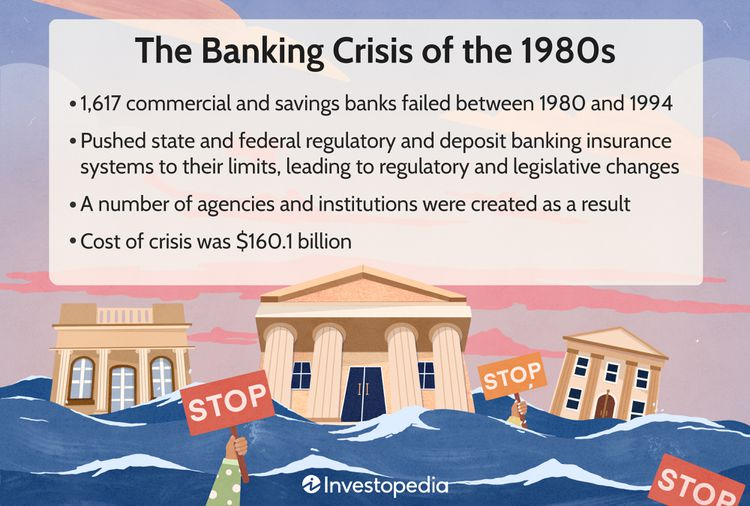
Operating in the 1980s, the Federal Savings and Loan Insurance Corporation (FSLIC), the government body that insured deposits at savings-and-loan institutions, collapsed when a wave of correlated failures across that industry overwhelmed its thin reserves. The episode showed that an underfunded guarantor can be worse than none at all: its mere existence lulls the market into skipping its own due diligence, so when the guarantee proves hollow the losses land on a system that had stopped watching for them.
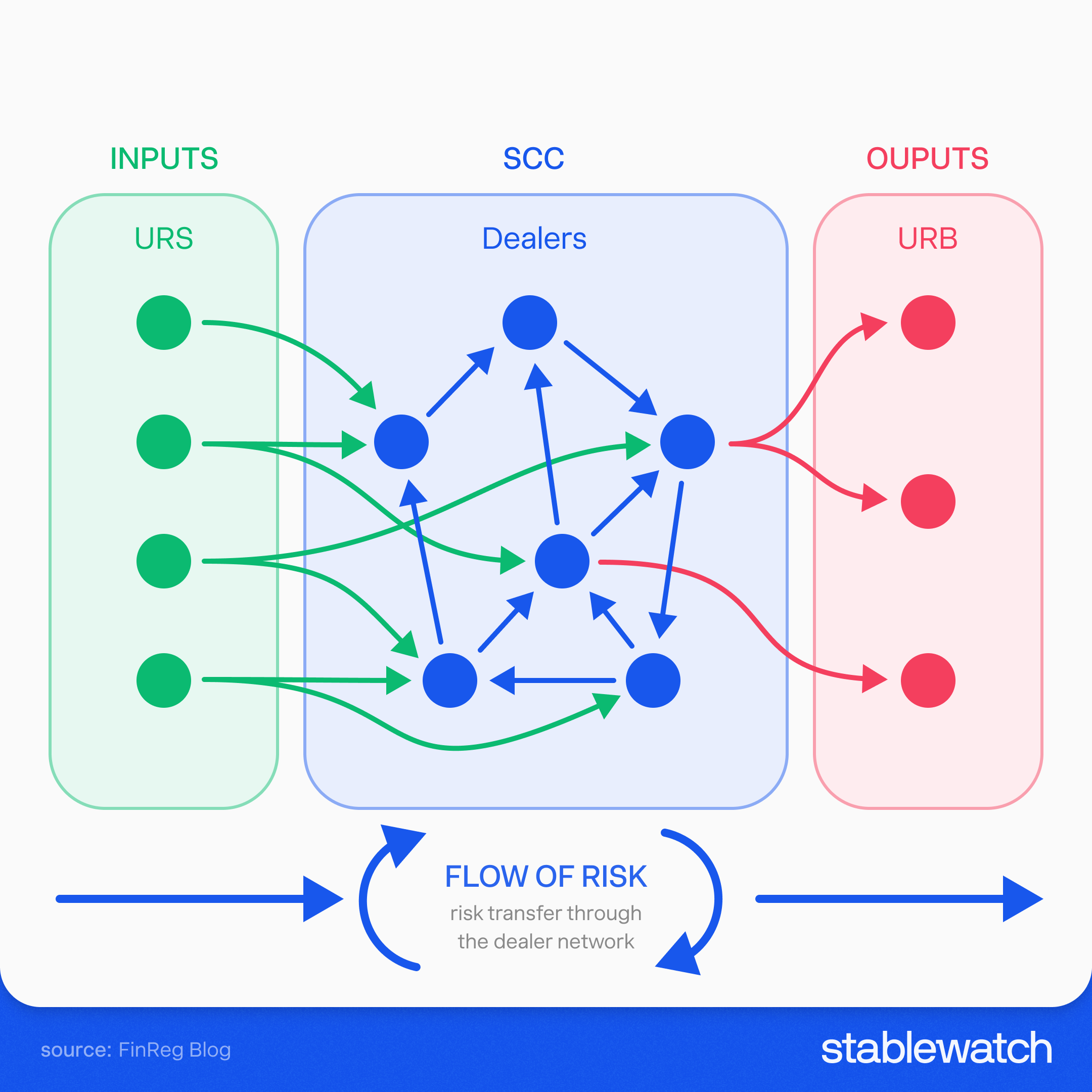
The Lloyd's of London "LMX spiral" of the late 1980s and early 1990s shows a subtler failure. Syndicates in the London market reinsured one another in a loop, each passing on a slice of the same asbestos and pollution claims, until the identical underlying losses had been counted many times over across the market. Nobody could see that the risk they were buying was risk they had already sold, and when the claims finally crystallised the aggregate blew through the entire market's capital, ruining thousands of individual investors who had backed the syndicates with unlimited personal liability. The lesson for onchain systems is direct: when the same exposure is repackaged and recycled around a closed circle of participants, apparent diversification is an illusion and the whole structure fails together.
American International Group's Financial Products division (AIG-FP), a London-based unit of the largest US insurer, stands as another archetype of the mispriced correlated tail. Through the mid-2000s it sold credit-default swaps, contracts promising to pay out if a bond defaulted, on more than $500 billion of debt, including the super-senior slices of mortgage securities assumed to be all but risk-free. Because those slices looked so safe, AIG collected the premiums without setting aside reserves against them. When US house prices fell in 2007 and 2008 the mortgage bonds were downgraded and AIG's own credit rating was cut alongside them; each downgrade contractually forced AIG to post more cash collateral to its counterparties, a demand that compounded as prices kept falling and drained the firm's liquidity within weeks. To stop a disorderly collapse regulators feared would take the banking system with it, the Federal Reserve and US Treasury assembled a rescue that ultimately committed roughly $182 billion of public money, beginning with an $85 billion Federal Reserve credit line in September 2008. AIG was not alone in the error: the monoline insurers MBIA and Ambac, firms whose entire business was guaranteeing other people's bonds, had sold similar protection backed only by their own top-tier credit ratings, and when those ratings were questioned the guarantees evaporated. There was never capital behind them, only a promise.
The Financial Crisis Inquiry Commission, the body Congress created to investigate the crash, delivered a brutal verdict: AIG-FP had operated "without putting up initial collateral, setting aside capital reserves, or hedging its exposure, a profound failure in corporate governance." The deeper lesson again is about correlation. AIG had treated thousands of mortgage positions as independent bets when they were all exposures to a single national housing market that could, and eventually did, turn at once. A guarantor that misjudges correlation this way does not just fail to pay a claim; because everyone else leaned on its promise simultaneously, its collapse propagates the very shock it was meant to absorb. The backstop becomes the contagion.
These failures teach lessons vital to understanding the uninsurable boundaries of decentralized finance today. Constructing verifiable safety layers requires respecting the absolute limits of capitalization and correlation. Traditional financial disasters provide the cautionary story so that new architectures do not replicate opaque reinsurance spirals or underfunded guarantees.
The focus turns now to how the decentralized ecosystem measures against that yardstick. DeFi already contains an analogue for each piece of the traditional safety stack, crime cover, return protection, and structural subordination, but the pieces exist in isolation rather than as an assembled whole. And the traditional insurance industry has begun to step directly onchain as well: Aon has settled its first insurance premium in stablecoins, and the broker WTW has bought a firm that specialises in recovering stolen digital assets. TradFi supplies the underwriting knowhow and the historical lessons; the blockchain makes the resulting capital stack verifiable in principle, though, as the Kelp episode below will show, not yet always legible in practice.
What Crypto Insurance Can Cover
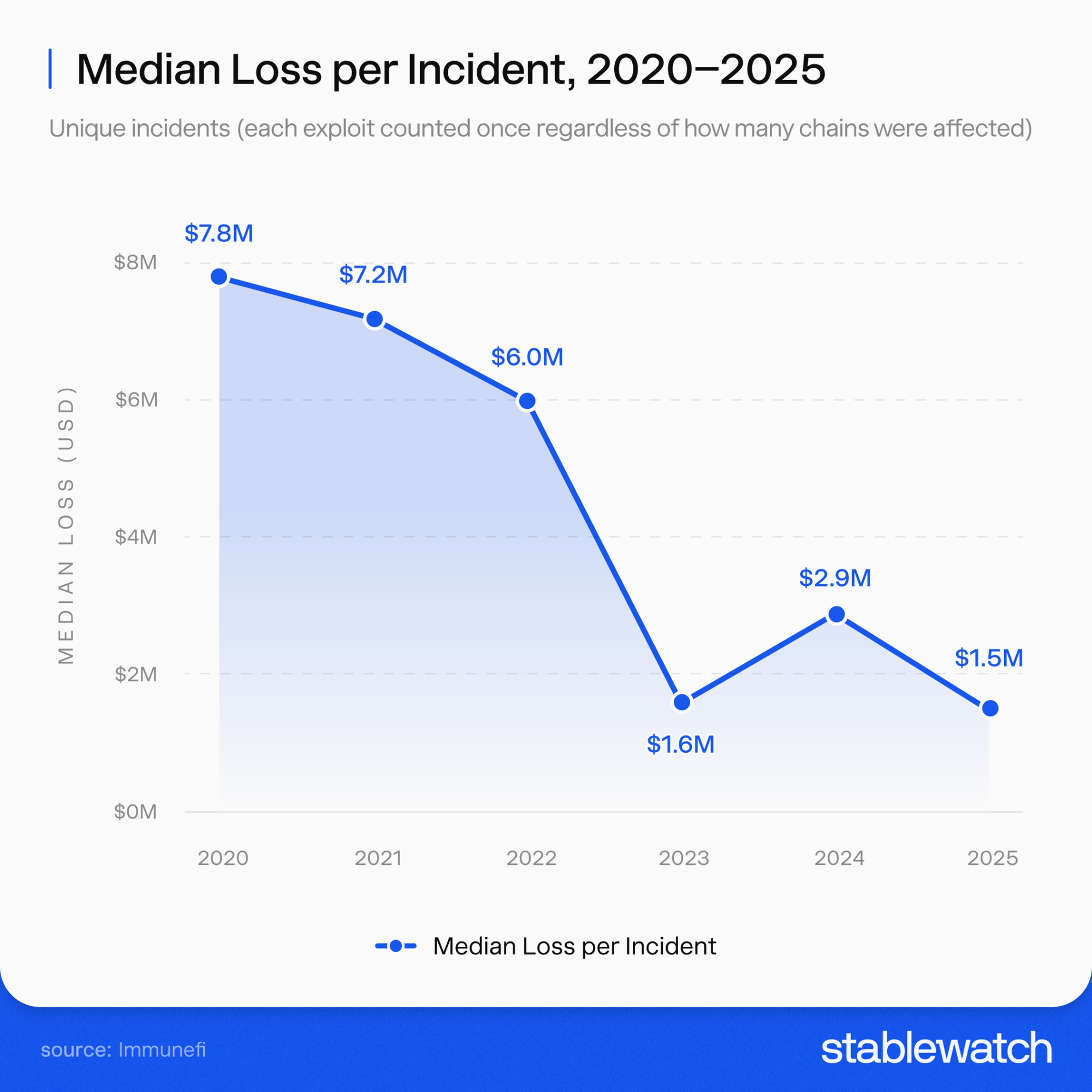
Public hack data reveals a loss record with a distinctive shape: heavy-tailed, mostly small, rarely a total wipeout, but only partially recoverable. The median exploit takes a couple of million dollars while a handful of massive breaches drag the mean far above it, so the same as in TradFi averages are the wrong tool: the risk lives in the tail, not the mean. Recoveries do happen, through negotiated returns, white-hat interception, and law-enforcement seizure, but they are the exception rather than the rule. Across DeFi only about 8% of stolen value has historically come back. Recovery cannot be assumed, let alone priced in.
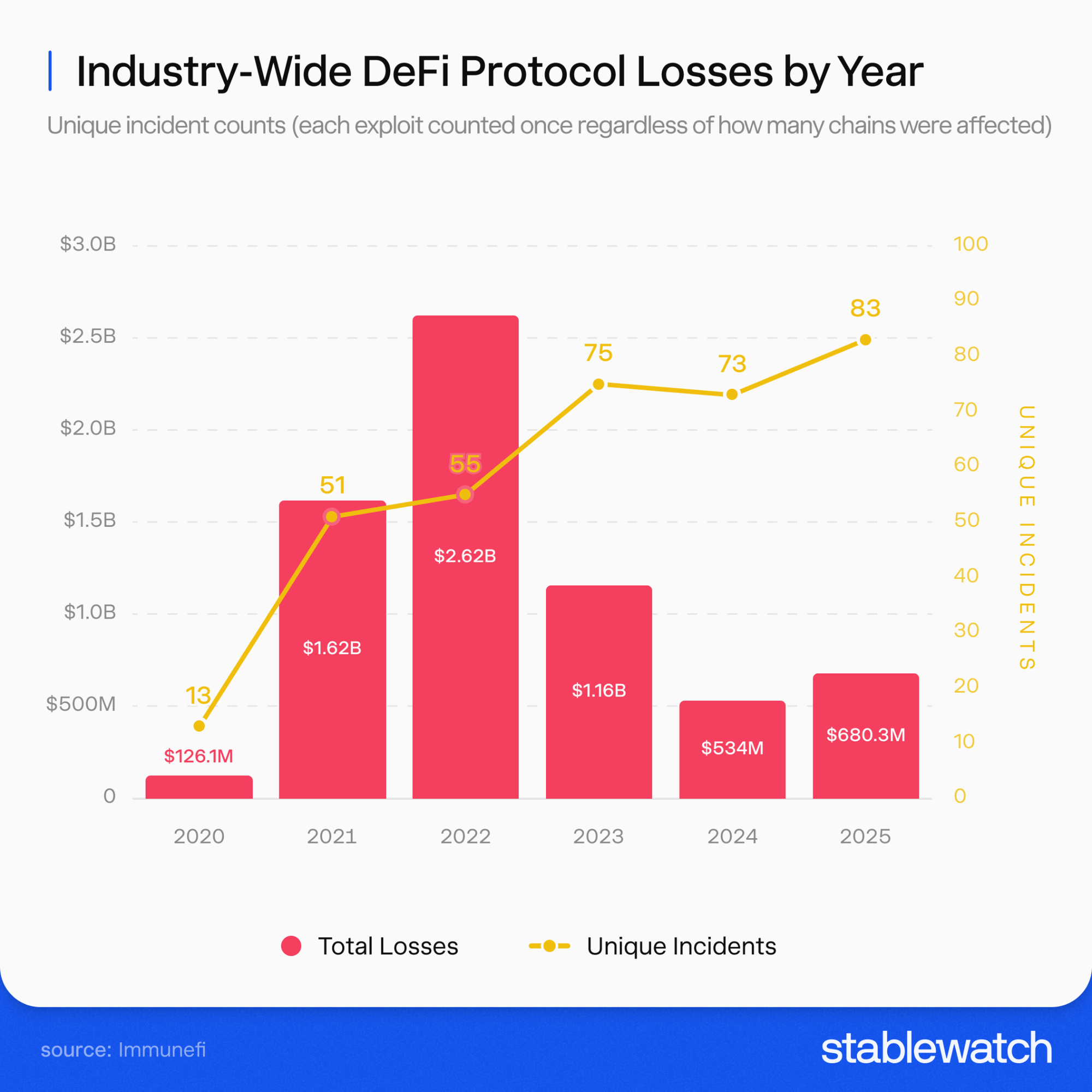
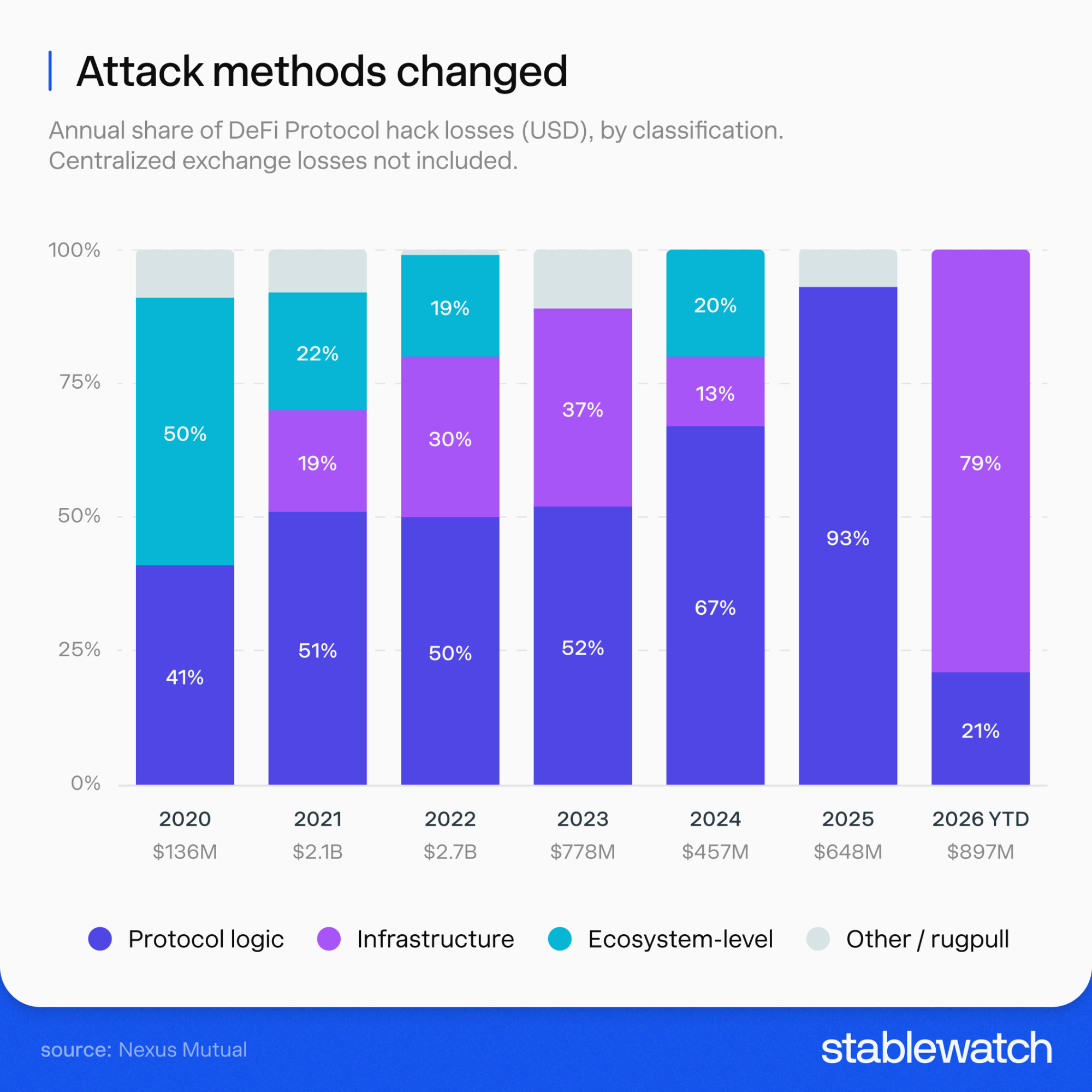
Idiosyncratic protocol crime, the logic errors, reentrancy attacks, and arithmetic overflows that afflict one protocol at a time, is measurable and, crucially, uncorrelated: a bug in one lending market says nothing about the safety of the next. Because these events do not strike everything at once, an insurer can spread them across many unrelated protocols and hold only a modest amount of capital against the whole book, which is what makes this layer cheap to cover. And the trend runs in the insurer's favour: as audits, formal verification, and onchain recovery tactics improve, the net loss left after each hack should keep shrinking.
The archetypal worst-case scenario shows both the danger and its limits. Suffering an exploit in March 2023, the Euler protocol lost approximately $197 million in digital assets, roughly two-thirds of its locked value. Through extensive onchain forensics and a negotiated return, the team eventually recovered around $240 million; the headline figure even topped 100%, but that was an artifact of ETH appreciating over the 21-day negotiation rather than a real surplus. The lesson is not that hacks get repaid, on average only a small fraction of stolen value ever returns, but that even an exploit taking roughly two-thirds of a single protocol’s locked value did not take the whole system with it, and did not end in the total depositor wipeout the fear implies.
Especially onchain, participants may often conflate technical crime with credit failure. April 2026 saw the Kelp DAO initial exploit subsequently trigger massive bad debt across Ethereum lending protocols. Analytically, this event constituted a credit failure, not a smart contract crime. Insurance cover would respond exclusively to the peril defined in the specific contract. The record of claims payout confirms this boundary: Nexus Mutual paid roughly $100,000 to users hit by the November 2025 Stream Finance fallout. Payouts executed strictly under liquidation failure coverage, completely separate from crime indemnification. Delineating crime from credit remains essential for calculating accurate exposure.
Nexus Mutual, effectively the market's reference underwriter, prices protocol cover through a published model in which each staking pool sets a floor target price that then floats up with demand; in practice, quotes for actively used protocols run from 0.23% to 4% of the sum insured per year. That range spans Nexus’s full book of over a 100 covered protocols, with blue-chip names such as Uniswap v3 or Safe going at a low rate of around 0.23%, while the 4% end is driven by smaller, less battle-tested protocols in the long tail. Following the anatomy of a premium set out earlier, it splits into three parts: a permanent tail-capital floor (the cost of capital held against the rare catastrophe, which never goes away), a decaying ambiguity load (the surcharge for not yet knowing the true risk, which shrinks as the loss record lengthens), and a residual economic rent (the excess a near-monopoly provider can charge while competition is thin).
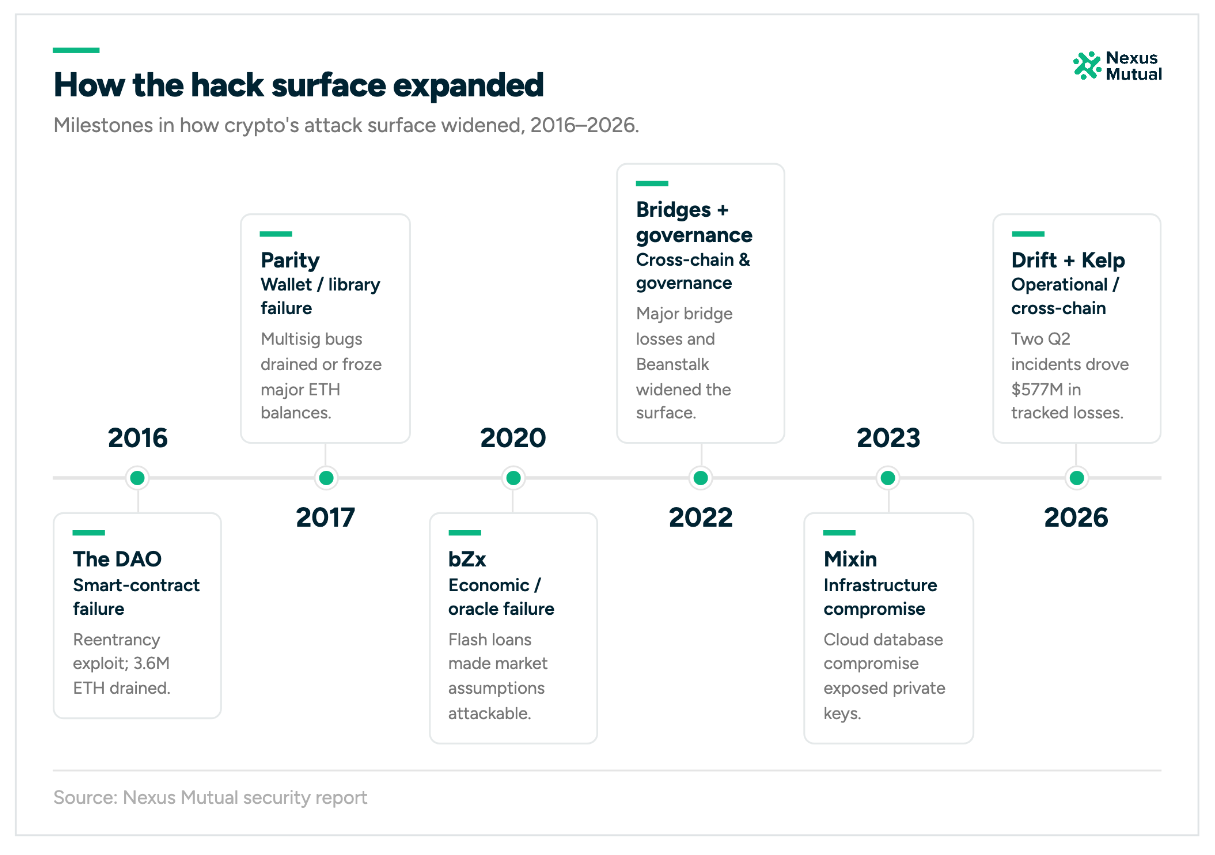
That is why cover on idiosyncratic crime should, in principle, grow far cheaper than today's quotes as the loss record lengthens and competition thickens, just as catastrophe-bond spreads compressed once the underlying perils were better understood. However, that compression holds only while losses stay idiosyncratic and a genuinely diversified pool of carrier capital stands behind it; it says nothing about a correlated event. Moreover, if the cover can become this cheap, its near-absence today needs explaining, and the explanation is not the price: yield-seeking users have historically declined to pay anything at all, capacity to underwrite large books is still scarce, and most institutional carriers will only cover permissioned, identity-verified pools that barely exist yet. The constraint is the market structure.
Fintech Abstraction Forces Institutional Safeguards Onchain
Decentralized insurance stalled for years not necessarily because of technological limits but because early builders targeted the wrong customer. Crypto-native yield-maximizers "self-insured" by diversifying, and refused to buy premiums that ate directly into their returns. On the supply side, Nexus Mutual survived as effectively the only scaled provider, paying just over $18 million in claims across seven years, a figure dwarfed roughly sixteenfold by the single $292 million Kelp loss. Its first-generation rivals did not survive. The 2022 credit crisis, the Terra/Luna collapse, the fall of Three Arrows Capital, and the FTX failure, exposed underwriters who had mispriced correlated de-peg, smart-contract, and custodian risk; their confidence and capital got drained away and many never recovered. InsurAce, which had grown to about $150 million and whose one notable episode was the 2022 UST de-peg, shrank to roughly $132,000, while Sherlock fell from about $60 million to half a million. Nexus came through not by dodging losses, it honored $4.9 million on FTX alone, but by pricing with enough discipline to pay what it owed and keep its capital pool intact; as it argued in a July 2026 retrospective, the category did not so much fail as consolidate to its most disciplined survivor.
As Hugh Karp diagnoses it, the safety gap has been the sector's chief barrier to institutional allocation, and the user base has begun shifting from degens in the onchain trenches toward institutions and fintech-shaped retail. Institutional capital, bound by fiduciary duty, cannot deploy billions into an ecosystem where risk mitigation rests on anonymous governance forums. That shift in who is exposed, more than any breakthrough in the insurance technology itself, is what should finally pull real capital into the crypto insurance sector.
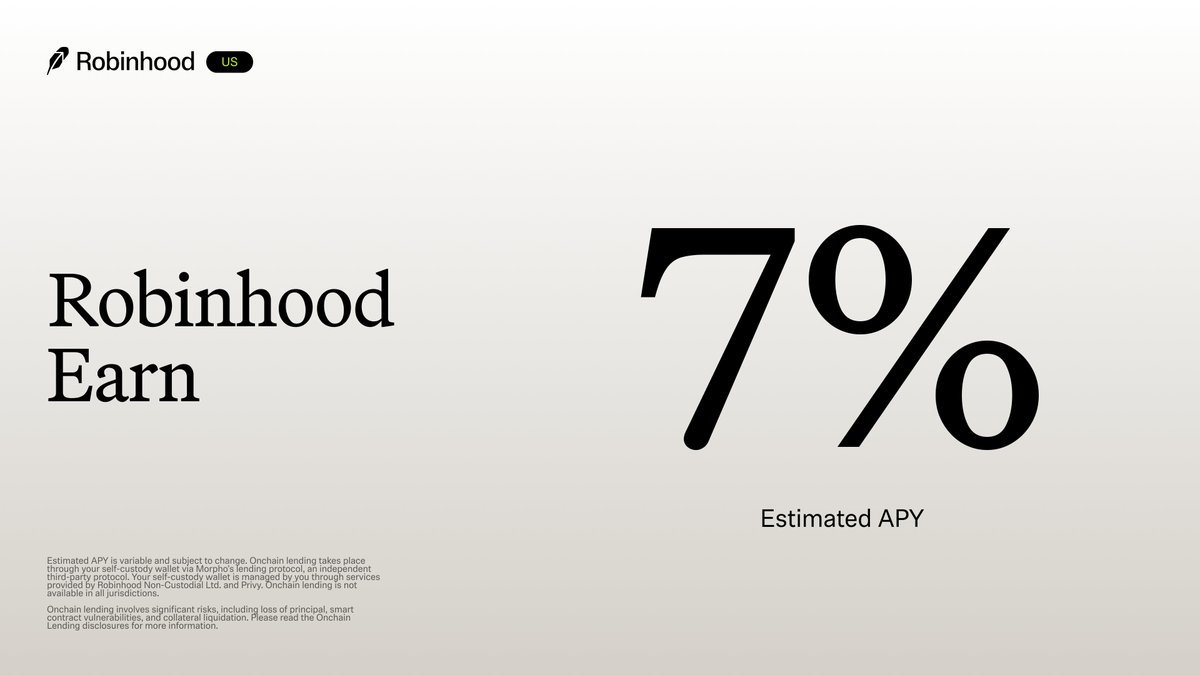
At the same time, demographics across the digital asset ecosystem are now moving toward an abstracted experience consumer cohort. Robinhood Earn, launched in July 2026, is the flagship example of this transition: a self-custody 7% USDG yield offered directly inside a mainstream retail brokerage app. Retail users and institutional allocators alike carry deeply ingrained expectations of deposit-insurance-style safety nets into these new venues. However, marketing such products to a mainstream audience fundamentally alters the liability profile, transforming onchain risk from a niche technical hazard into a large-scale consumer-protection liability.
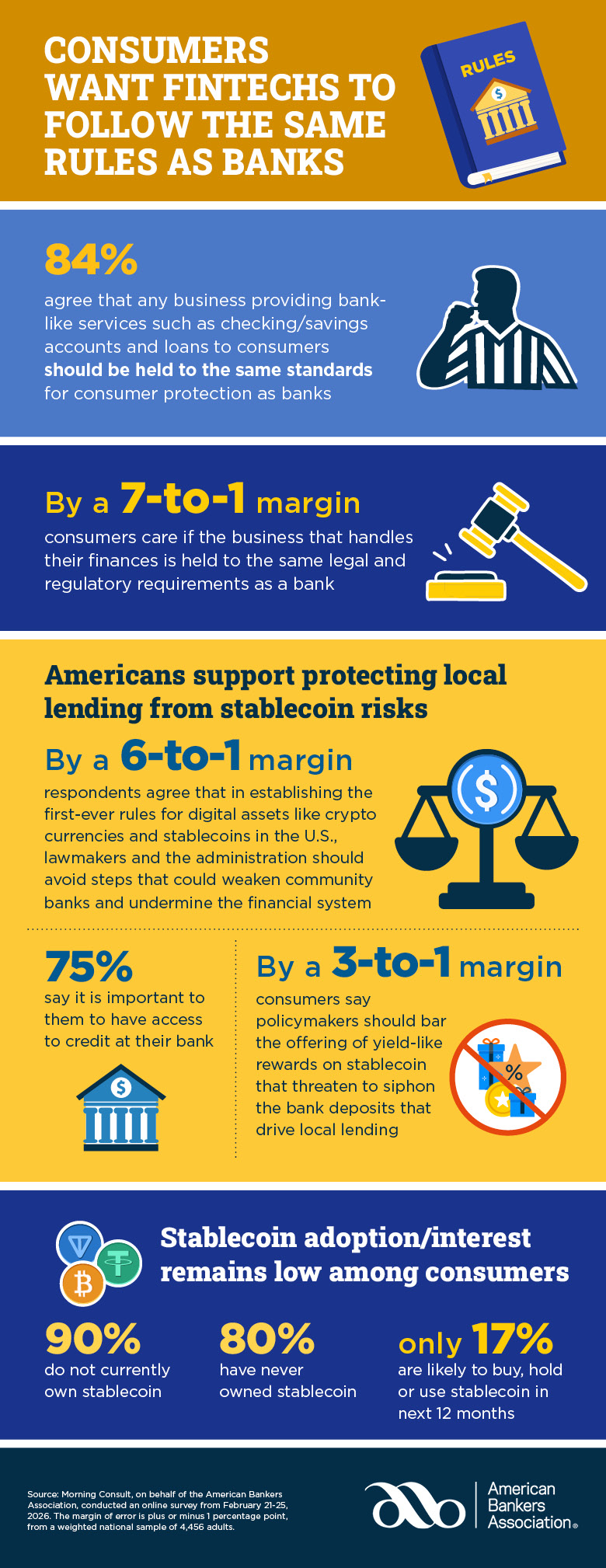
Survey data confirms this behavioral demand for parity. According to a March 2026 American Bankers Association poll, 84% of consumers believe nonbank fintechs offering bank-like services must operate under identical consumer-protection standards. Its bank-industry sponsorship warrants a caveat, but the finding still aligns with broader user reluctance. And institutional capital allocators explicitly demand regulated consumer protections before committing serious volume.
In a global digital asset market approaching a valuation of $3.3 trillion, the regulatory regime most of the time leaves the end-user positioned as an unsecured creditor. Current adoption metrics highlight a massive supply-side failure: the under-2% of DeFi TVL that carries any cover at all sits almost entirely with a single provider, Nexus Mutual. Reconciling the intense retail demand for bank-grade protection with the stark reality of creditor status requires explicit capital stacks capable of absorbing expected losses before they ever reach the depositor.
Onchain Capital Protection Architectures
Loss-absorbing capital already operates onchain through transparent structural subordination. Operating junior-to-senior loss waterfalls, decentralized lending systems often utilize first-loss risk-capital layers to shield depositors from immediate shocks. Known from traditional finance, tranching operates live in onchain credit, though much of the multi-billion-dollar curated-vault layer currently functions pro-rata, spreading losses rather than strictly subordinating them.
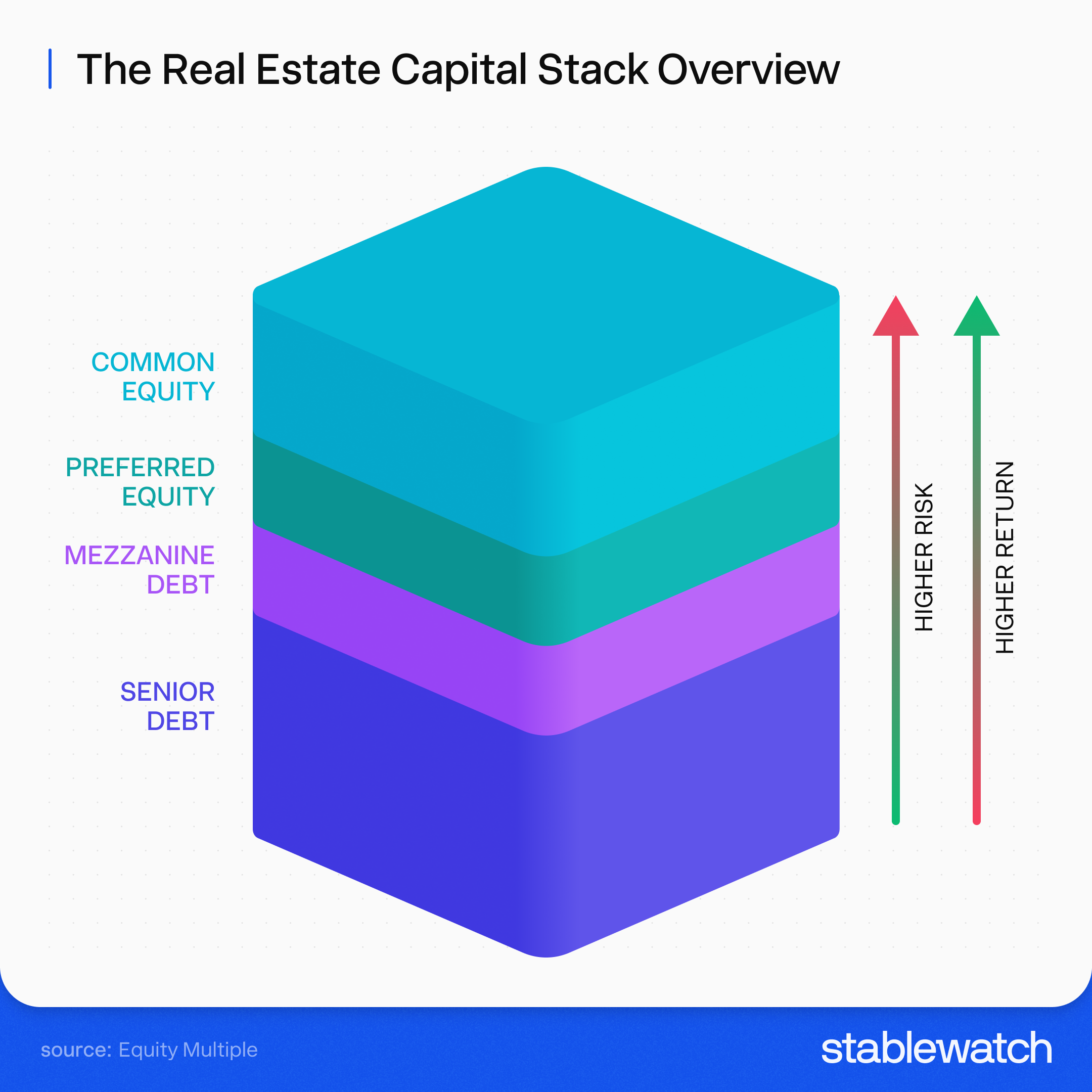
Sky's ecosystem provides the clearest live instantiation of capital stack tranching, and by design it protects the ordinary yield depositor. A dedicated class of capital allocators called Prime Agents contribute junior risk capital that stands as explicit first-loss in the stack, placing their own capital directly in front of the saver who deposited stablecoins to earn the Sky Savings Rate. Accepting a larger share of system risk in exchange for uncapped yield above benchmark, these agents fund the borrowing activity that generates yield while absorbing defaults before those losses could reach the depositor. Only once that junior buffer is fully exhausted does a loss touch the senior risk capital layer, and only after that does it reach the protocol's Surplus Buffer, an accumulation of stability fees and liquidation penalties held against residual bad debt. Delivering neither FDIC coverage nor any sovereign guarantee, this ordering nonetheless routes expected losses onto professional first-loss providers rather than the retail saver being exposed. It is not strictly deposit insurance, but it is a real, legible instance of the exact contestable-risk protection the traditional stack manufactures through subordination offered to deliver safety to users and attract them onchain.
That protection, however, carries an unstated assumption: that losses arrive the way a waterfall expects them to, one at a time and small enough for the junior layer to absorb before they climb up the stack. Subordination is built for the idiosyncratic loss; it offers far less against a correlated cascade of losses that hit every layer at once.
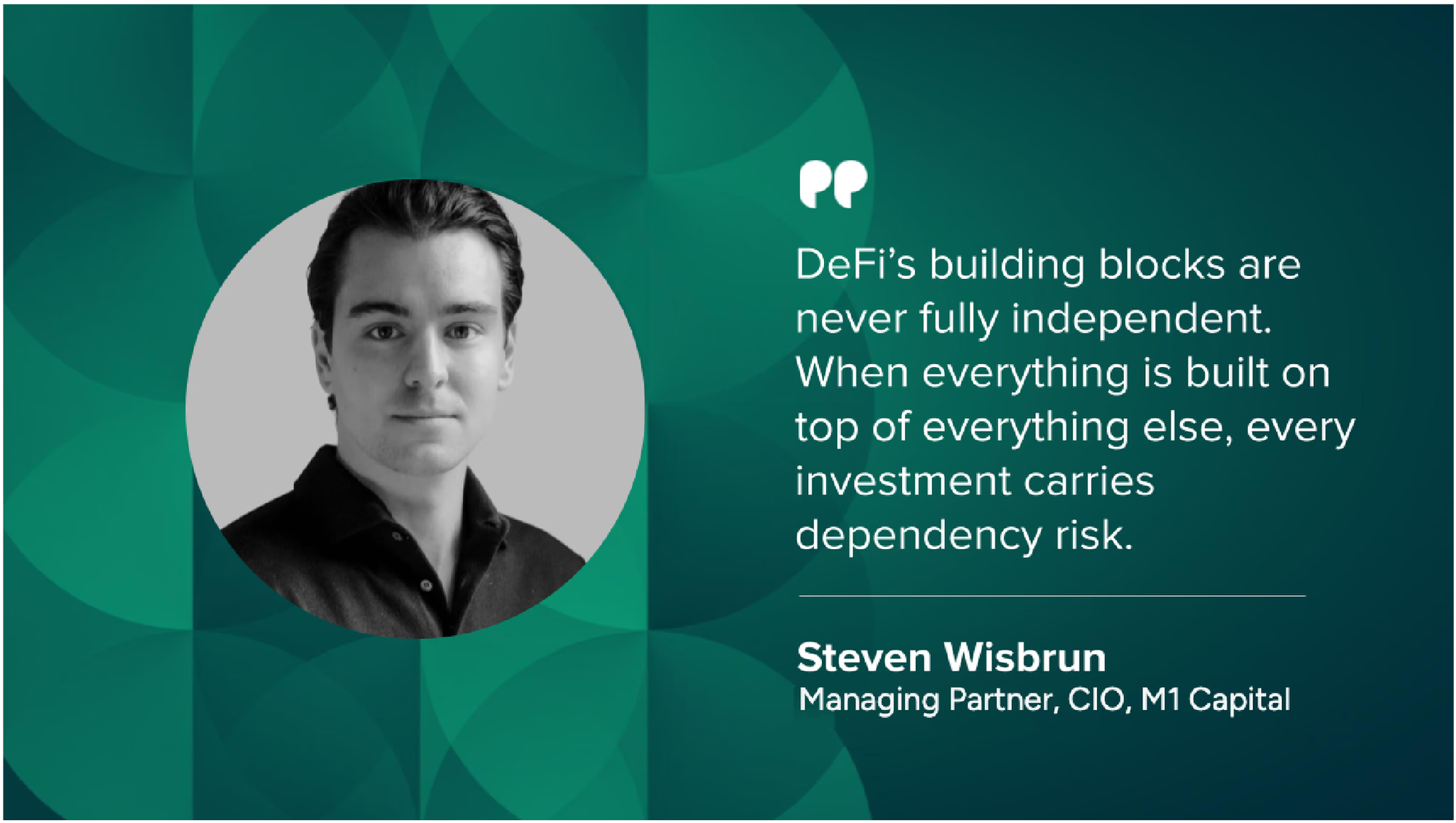
The mechanism that turns a single exploit into a system-wide loss is the same one that undid AIG: hidden correlation, except onchain it hides inside collateral. A token deposited in one protocol is routinely borrowed against, wrapped, and redeposited in the next, so the same underlying asset can back positions in a dozen venues at once, a recursive rehypothecation that is technically visible on a public ledger yet difficult to trace in practice. As M1 Capital’s Steven Wisbrun put it in July 2026: “With everything built on top of everything else, every investment comes with a dependency risk. [...] When one thing breaks, it doesn’t break alone; everything stacked on top inherits the damage.”
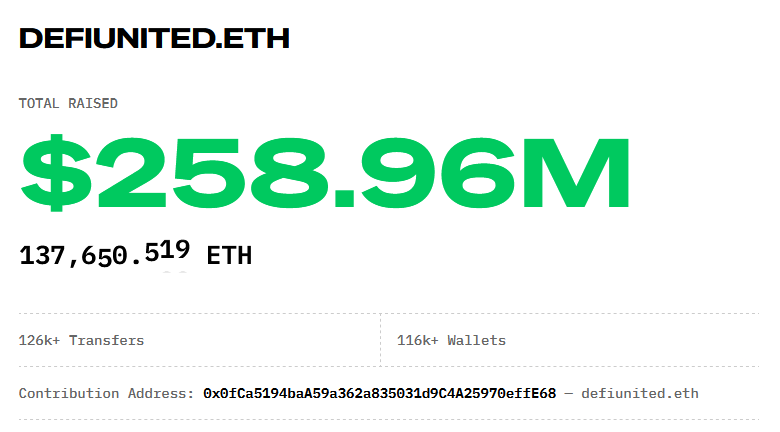
When Kelp's rsETH was compromised the damage did not stay with Kelp: the token had been posted as collateral to borrow real assets across multiple lending markets simultaneously, so one point of failure radiated outward exactly as AIG's mortgage positions did in 2008. Exposures that looked independent were the same bet wearing different labels. As Relm's Joseph Ziolkowski observes, "in an industry where people are talking about decentralization, the reality is there's concentration risk." It is the Lloyd's LMX spiral rebuilt in code, risk recycled around a closed circle until apparent diversification is an illusion, and it is precisely the correlated exposure a diversified crime policy is not built to absorb.
The same Kelp DAO episode is also the clearest live test of whether automated first-loss capital can withstand that kind of shock. In April 2026 an attacker compromised the LayerZero verifier infrastructure Kelp relied on and forged cross-chain messages to release 116,500 rsETH, around $292 million. Nexus Mutual classifies the root cause not as a contract flaw but a compromised operations wallet, and attributes it to North Korea’s Lazarus Group. The fraudulent tokens were then posted as collateral to borrow around $190 million of real WETH across major lending markets, leaving Aave alone with bad debt. Aave's code did exactly what it was written to do, founder Stani Kulechov stressed that "the exploit was external and the protocol's contracts were not compromised," but functioning as designed was not the same as being safe: the contracts had been told to trust manipulated external data, and they did.
The episode exposed the limits of a thin automated buffer. Aave's Umbrella module is built to slash staked capital automatically to cover bad debt, and its size was clear: about $54 million earmarked for the affected market. Against a roughly $196 million shortfall that was nowhere near enough, and the automation did not even run its course; governance moved to pause the slashing pending an external resolution. The loss was ultimately addressed not by the codified waterfall but by an ad-hoc coalition of seven protocols that pledged over $250 million to restore the collateral's backing, a "DeFi United" bailout rather than a clean, priced payout. This is like the FSLIC thin-fund failure and the Lloyd's closed-loop rescue landing onchain: a buffer sized for a $5 million idiosyncratic loss does not scale to a $200 million systemic one, and when it fails the fallback is improvisation.
Robinhood Earn explicitly maps this exact boundary for the retail user. Underwritten by Lloyd's and Relm, Robinhood's policy covers "cyber incidents and smart contract exploits." Verbatim disclosures state the policy "covers Robinhood; it is not a personal policy for you and does not give you a direct right to make a claim," and operates as "not a substitute for FDIC insurance." Translating this to a stress scenario: if collateral values crash and Morpho's liquidations fail to clear, the lending vault socializes the bad debt pro-rata directly to the retail lenders. Paxos's USDG reserves protect the dollar peg, but provide no protection for the 7% yield.
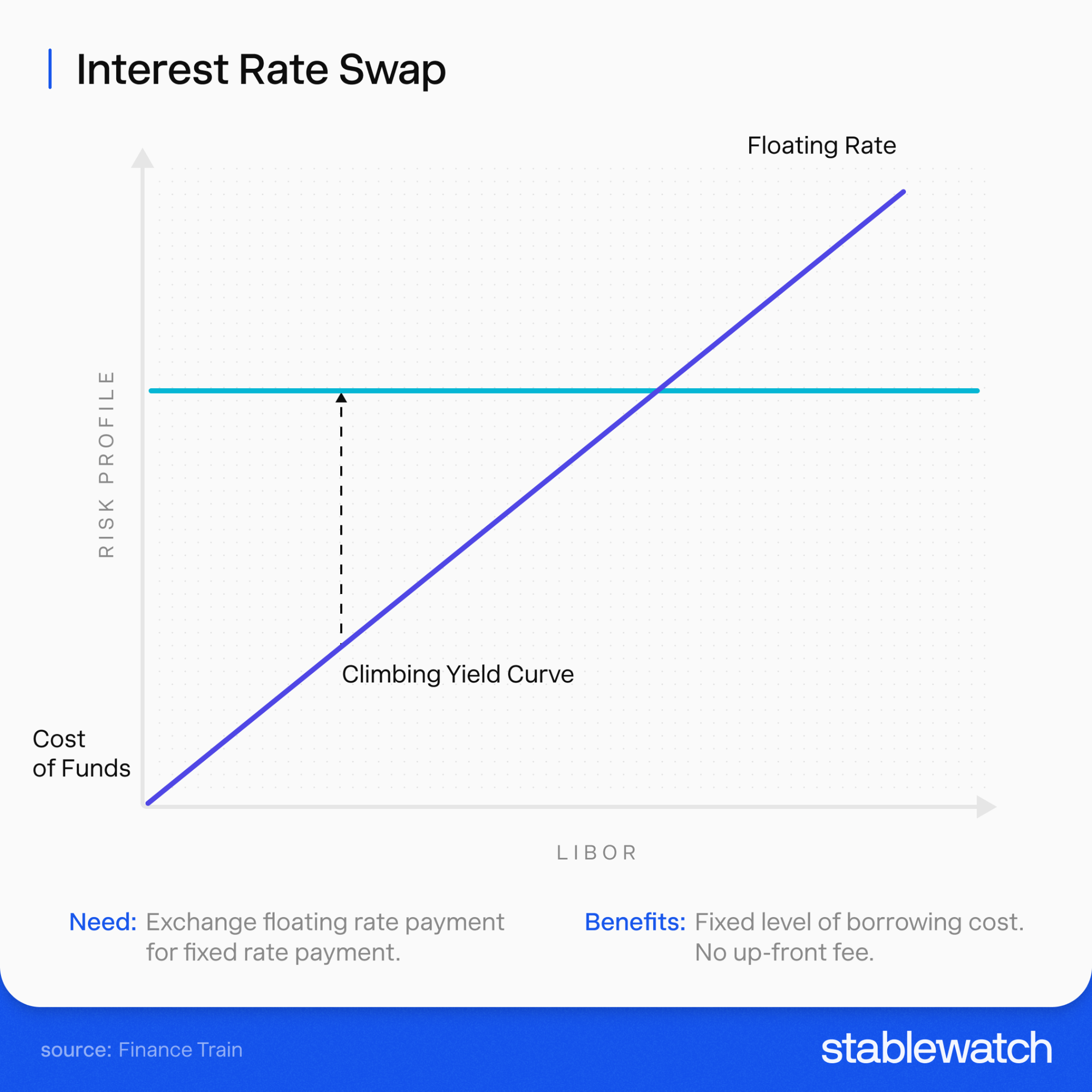
Return protection still remains the weakest layer in the onchain safety stack. Pendle's Boros platform translates traditional interest rate swaps into the DeFi environment, allowing protocols to hedge against funding-rate compression by trading Yield Units (YUs). While Boros enables sophisticated delta-neutral strategies to lock in fixed APRs, the broader onchain analog to the Guaranteed Interest Contract described earlier, principal back plus a fixed rate, barely exists. As of mid-2026 we are aware of no onchain entity offering the full package, guaranteed return of principal paired with a fixed, book-value crediting rate; even the traditional carriers now stepping onchain stop short of it. However, Nexus Mutual’s Real World Insurance Vault is the closest live product of this kind: USDC deposits earn a fixed Baseline Yield, benchmarked to short-duration Treasuries plus a spread, backstopped quarterly by Nexus Mutual Cover if the underlying book underperforms. Locking deposits for durations matching the underlying real-world insurance income streams creates additional upside. The vault is covered by all-in Nexus Mutual cover, shielding users from the usual risks such as smart contract or oracle risk, but also yield dropping below the benchmark rate or offchain risks such as the underlying principal being impacted by insurance payments. At the same time Nexus’ own risk disclosure highlights that it does not eliminate all tail risk, particularly in systemic events affecting both the Vault and Nexus Mutual simultaneously, which includes the insurance partner itself defaulting.
In March 2026 Aon settled its first insurance premiums in stablecoins, using USDC and PayPal's PYUSD to pay for the insurance programs of Coinbase and Paxos, a move it tied explicitly to the regulatory clarity of the 2025 GENIUS Act and framed as learning "how these mechanisms operate within established systems." In June 2026 the broker WTW acquired Redefind, a UK platform that insures the cost of recovering stolen digital assets, forensics, tracing, and legal recovery, rather than the volatile value of the coins themselves. And OnRe, relaunched in 2025 out of the earlier Nayms and backed by Ethena, runs a live onchain reinsurance pool collateralised in sUSDe, letting capital earn real-world reinsurance yield transparently onchain. Crucially, all of this crossover stays custody-deep and protocol-shallow: the newcomers insure theft, recovery, and reserves, but none underwrites the risk that a protocol's own smart-contract logic or economic design fails. Relm's co-founder and CEO Joseph Ziolkowski drew that boundary in a 2026 CCN interview: insurers can cover an individual fund exposed to a given stablecoin, but not the market as a whole, since a systemic de-peg "cannot be insured, not across the system," because "systemic risk isn't designed to be transferred." Underwriting these pools also generally requires knowing who the participants are, which sits awkwardly with permissionless, pseudonymous wallets; work on identity-verified pools and wallet-level credentials is underway but early, with usable standards existing in pieces rather than at scale, and it remains one of the main practical bottlenecks between institutional underwriters and onchain risk. Global oracle failures and large-scale stablecoin de-pegs are correlated, hard-to-model risks of exactly this kind, and they overwhelm decentralized mutuals rather than being absorbed by them.
What Onchain Insurance Can and Cannot Promise
In the past memos we discussed how crypto can offer solutions for the problems of traditional finance. Here, TradFi must supply the pricing discipline and lessons of history to a DeFi safety layer that is still in its early phases. Reinstantiating the actuarial canon onchain combines crime cover priced off the tail, returns hedged by derivatives, and capital protected by strict subordination. Deployed against onchain yield, that stack eventually will close the contestable gap and draw on a real edge over TradFi's opaque reinsurance chains: a ledger that is verifiable in principle, even if, as the Kelp episode showed, that visibility does not yet make hidden correlation easy to trace in practice.
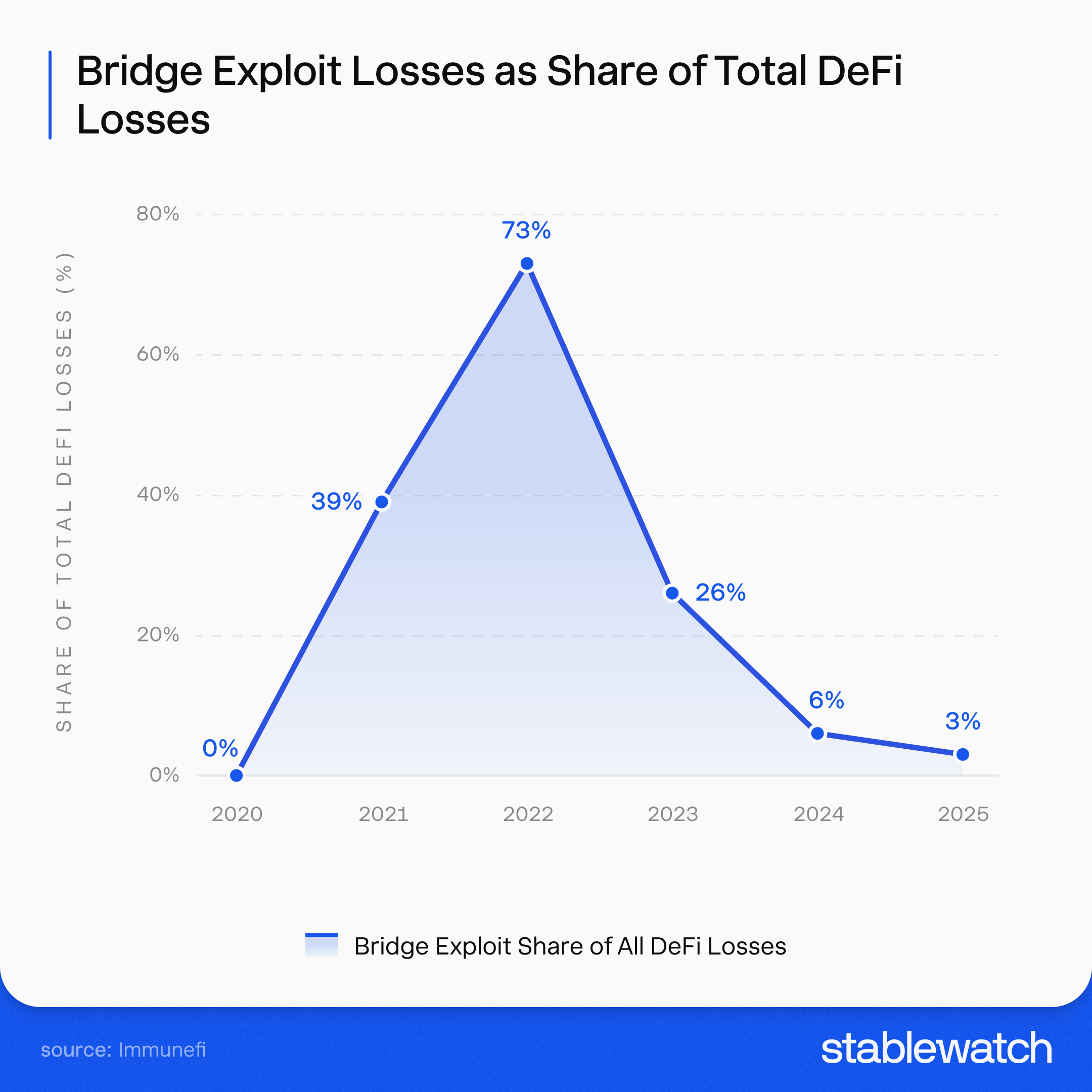
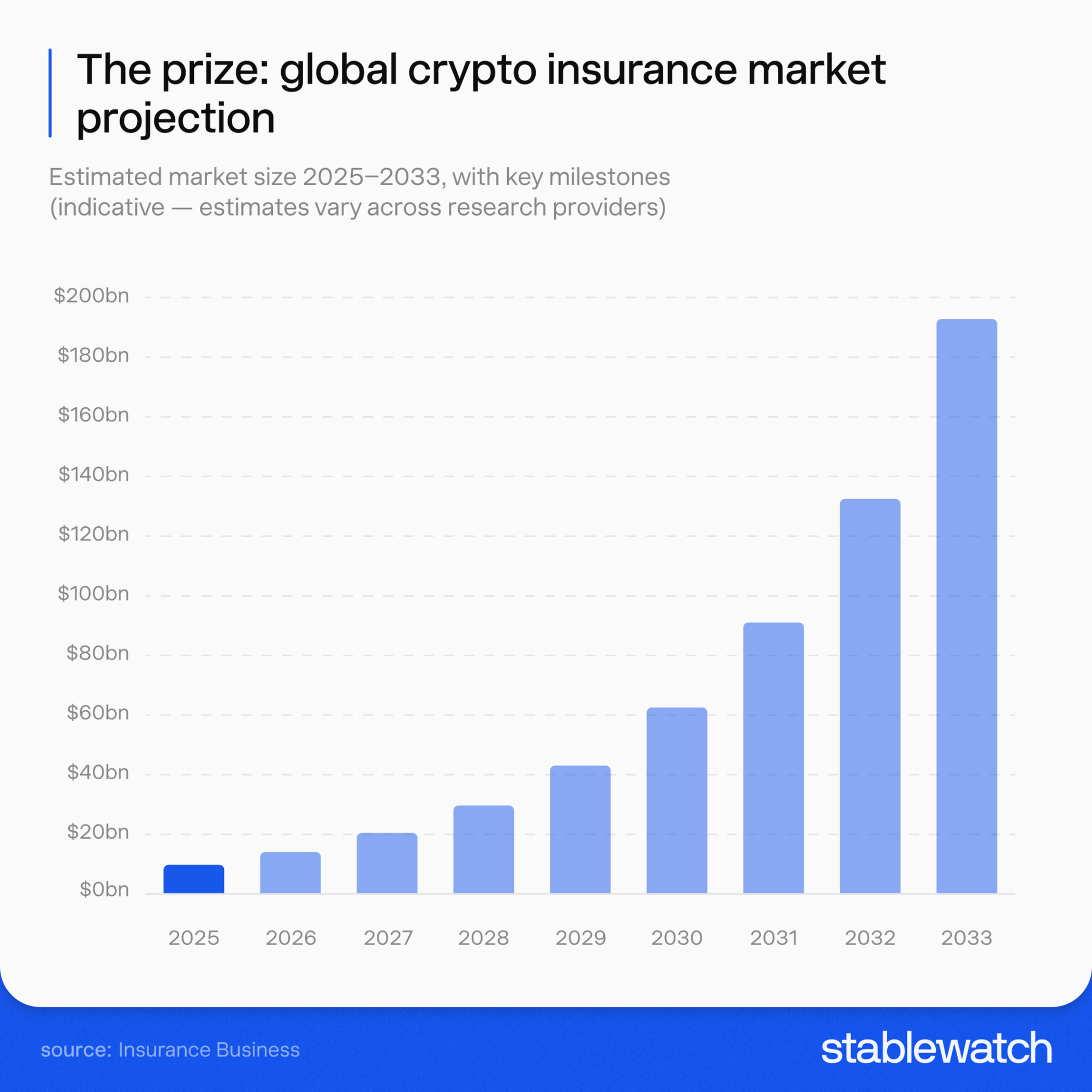
Crypto insurance today sits roughly where catastrophe insurance sat a generation ago. When catastrophe bonds were new, underwriters charged a heavy premium for perils they couldn't yet model; as the data and models matured that surcharge compressed and the cover grew cheap and widely available. Idiosyncratic protocol crime is on the same path, and its passthrough cost should compress substantially as its track record lengthens. But two things never compress: the capital an underwriter must permanently hold against the tail, and the flat exclusion of correlated perils like bridge and oracle failures. Those are the same limits that leave a $424 billion natural-catastrophe gap uninsured in traditional markets today. Crypto can inherit TradFi's pricing discipline, but it inherits TradFi's boundaries with it.
However, a larger shift is now under way: for the first time, established insurers and brokers are moving onto public blockchains rather than watching from the sidelines. Aon, WTW, and OnRe show real integration at the custody and premium-settlement layer, yet the pattern is telling, not one of them will likely underwrite the protocol tail itself, the risk that a protocol's own code or economic design breaks. Robinhood Earn encapsulates the same dual reality, marketing an insurance wrapper that protects the institutional platform while severe credit losses would fall directly on the retail user.
The near-term prize is within reach: partial, diversified crime cover sitting on top of legible first-loss capital is achievable with tools that already exist. The harder, longer-term piece is return protection, the machinery that would let an onchain saver be promised a rate the way a fiat savings product can. The honest conclusion is cautiously constructive, but it needs one blunt caveat. The layer that can be insured cheaply, idiosyncratic crime, is not the layer that actually threatens a mainstream saver; the event that would wipe out a Robinhood Earn depositor, a systemic de-peg or a bridge or oracle failure, sits in the correlated tail that remains uninsurable. On contestable crime the onchain ecosystem can reach genuine parity with traditional cover, and on the other layers the foundations already exist, Sky's Prime Agents have first-loss subordination working live and Pendle's Boros shows onchain yields can be hedged, but they remain early: today's first-loss buffers are still too thin for a systemic shock, a true principal-and-rate guarantee has yet to be built. The pieces are on the table; they have to yet be assembled into the stack a mainstream saver would recognise as safe.
Sources
- "Understanding Deposit Insurance." Federal Deposit Insurance Corporation (FDIC). https://www.fdic.gov/resources/deposit-insurance/understanding-deposit-insurance
- "Crypto Users Are Choosing Juicy Yields Over Protection, Putting Billions at Risk of Hacks." CoinDesk, May 2026. https://www.coindesk.com/business/2026/05/16/crypto-users-are-choosing-juicy-yields-over-protection-putting-billions-at-risk-of-hacks
- "Global natural catastrophe protection gap hits US$424 billion." Swiss Re / Insurance Business, 2025. https://www.insurancebusinessmag.com/reinsurance/news/breaking-news/global-natural-catastrophe-protection-gap-hits-us424-billion--swiss-re-577930.aspx
- "Stable Value Funds: Everything You Need to Know." MetLife. https://www.metlife.com/retirement-and-income-solutions/stable-value/everything-you-need-to-know/
- "Buffett, Jain Speak the Hard Truth About Insurance." Risk Market News. https://www.riskmarketnews.com/buffett-speaks-the-hard-truth-about-insurance-at-annual-meeting/
- "Insuring the Unknown." Net Interest. https://www.netinterest.co/p/insuring-the-unknown-ee1
- "What the Financial Crisis Commission Concluded About AIG's Failure." Insurance Journal / FCIC Final Report. https://www.insurancejournal.com/news/national/2011/01/27/182186.htm
- "Back from the Brink: The near collapse of Lloyd's of London." Actuaries Institute. https://www.actuaries.asn.au/research-analysis/back-from-the-brink-the-near-collapse-of-lloyd-s-of-london
- "War & Peace: Behind the Scenes of Euler's $240M Exploit Recovery." Euler Finance Labs, 2023. https://www.euler.finance/blog/war-peace-behind-the-scenes-of-eulers-240m-exploit-recovery
- "Aave Could Face Up to $230 Million in Losses After Kelp DAO Bridge Exploit Triggers DeFi Chaos" (source for the $124M–$230M bad-debt loss-allocation scenarios and ~$190M borrowed). CoinDesk, April 2026. https://www.coindesk.com/tech/2026/04/20/aave-could-face-up-to-usd230-million-in-losses-after-kelp-dao-bridge-exploit-triggers-defi-chaos
- "Aave Records $6 Billion TVL Drop as Kelp Hack Exposes Structural Risk at DeFi Lender" (source for ~$292M drained from the bridge, ~$196M central Aave bad debt, and the $6B TVL drop). CoinDesk, April 2026. https://www.coindesk.com/tech/2026/04/19/aave-records-usd6-billion-tvl-drop-as-kelp-hack-exposes-structural-risk-at-defi-lender
- "Pricing." Nexus Mutual Documentation. https://docs.nexusmutual.io/protocol/pricing/
- "Nexus Mutual Pays Nearly $100k in Claims due to Stream Finance Fallout." Nexus Mutual, 2025. https://nexusmutual.io/blog/nexus-mutual-pays-nearly-100k-in-claims-due-to-stream-finance-fallout
- "DeFi Insurance Is Dead: Long Live DeFi Insurance." Nexus Mutual, July 2026. https://nexusmutual.io/blog/defi-insurance-is-dead-long-live-defi-insurance
- “The State of Crypto Insurance: Q2 2026” Nexus Mutual, July 2026. https://nexusmutual.io/blog/the-state-of-crypto-insurance-q2-2026
- "Onchain Insurance: Who Is Underwriting DeFi's Risks?" Blocmates. https://www.blocmates.com/articles/protocol-covers-who-is-underwriting-defis-risks
- "Notice of Proposed Rulemaking to Establish GENIUS Act Requirements." FDIC, April 2026. https://www.fdic.gov/news/financial-institution-letters/2026/notice-proposed-rulemaking-establish-genius-act
- "Nobody Buys DeFi Insurance." The Token Dispatch. https://www.thetokendispatch.com/p/nobody-buys-defi-insurance
- "Robinhood Rolls Out Public Blockchain as It Expands Deeper into Crypto." CoinDesk, July 2026. https://www.coindesk.com/business/2026/07/01/robinhood-rolls-out-public-blockchain-as-it-expands-deeper-into-crypto
- "'Traditional Insurance Models Break in Web3' — Relm CEO Joseph Ziolkowski." CCN, 2026. https://www.ccn.com/education/crypto/web3-insurance-risk-relm-ceo-interview/
- "ABA survey: Americans want fintechs to follow bank rules." American Bankers Association, March 2026. https://bankingjournal.aba.com/2026/03/aba-survey-americans-want-fintechs-to-follow-bank-rules/
- "Crypto Insurance Gap Reveals $3.31 Trillion Market Opportunity." Risk & Insurance, 2026. https://riskandinsurance.com/crypto-insurance-gap-reveals-3-31-trillion-market-opportunity/
- "Security Considerations for Vault Curators." Morpho Documentation. https://docs.morpho.org/curate/concepts/security-considerations/
- "Aon announces First Stablecoin Insurance Premium Payment." Aon Media Room, March 2026. https://aon.mediaroom.com/2026-03-09-Aon-Announces-First-Stablecoin-Insurance-Premium-Payment
- "Insurance incubator to on-chain reinsurer (OnRe)." Insurtech Gateway, 2025. https://www.insurtechgateway.com/2025/05/29/insurance-incubator-to-on-chain-reinsurer/
- "WTW just made a big move on crypto insurance — shrewd, or big risk?" Insurance Business. https://www.insurancebusinessmag.com/uk/news/technology/wtw-just-made-a-big-move-on-crypto-insurance--shrewd-or-big-risk-577915.aspx
- "Robinhood Earn." Robinhood. https://robinhood.com/us/en/support/articles/crypto-earn/
- "Terms and Conditions — USDG EU Whitepaper." Paxos. https://www.paxos.com/terms-and-conditions/usdg-eu-whitepaper
- "Required Risk Capital" Sky Protocol. https://info.sky.money/required-risk-capital
- "What is Umbrella, Aave’s new security module (AAVE)?” https://oakresearch.io/en/analyses/innovations/what-is-umbrella-new-product-from-aave
- "Boros: Funding Rate Futures on Pendle" https://oakresearch.io/en/analyses/innovations/boros-funding-rate-futures-on-pendle
- "Nexus Mutual Cover Terms and Conditions" https://api.nexusmutual.io/ipfs/QmYdBBwtdn9Z6j9nX3SkzPjWmvHxjMUbu44sibnQ9QrCHX
- "Cyber Risk Accumulation: Fully tackling the insurability challenge" https://www.genevaassociation.org/publication/cyber/cyber-risk-accumulation-fully-tackling-insurability-challenge
- "Financial Crisis Inquiry Commission — Final Report, Chapter 19: September 2008: The Bailout of AIG." https://fcic-static.law.stanford.edu/cdn_media/fcic-reports/fcic_final_report_chapter19.pdf
- "Crypto Exploit Leaderboard." rekt.news. https://rekt.news/leaderboard
- "DeFi Hacks / Total Value Hacked." DeFiLlama. https://defillama.com/hacks
- "rsETH Incident Report — April 20, 2026." Aave Governance Forum. https://governance.aave.com/t/rseth-incident-report-april-20-2026/24580
- "Who Is DeFi United? Seven Protocols Coordinating DeFi's Largest Bailout." Phemex Academy, April 2026. https://phemex.com/academy/defi-united-seven-protocols-largest-bailout
- “Real World Insurance Vault” Nexus Mutual. https://docs.nexusmutual.io/rwi-vault/