What is Osero Earn?


Osero Earn: Institutional-grade stablecoin savings, embedded in hours, not weeks.
The problem with stablecoin yield
Platforms that hold or route stablecoins on behalf of users e.g. wallets, neobanks, custodians, exchanges, have no easy way to put those balances to work. Offering yield means taking on asset management risk, building infrastructure from scratch, or hiring a risk curator.Hiring a risk curator sounds like the easy path but curators don't lock in their own capital so they have no skin in the game. If a strategy underperforms or a position blows up, the downside lands on your balance sheet, not theirs. Worse, most DeFi pools simply don't have enough liquidity to serve meaningful volume so even when the strategy works in theory, it breaks down in practice at scale.
The result is that billions of dollars in stablecoin balances sit idle within platforms that would gladly offer savings products if the path weren't so difficult. Osero Earn is built to change that.
What Osero Earn does
Osero Earn packages the Sky Savings Rate into a developer-friendly SDK, creating a seamless bridge between the traditional development environment and the leading onchain yield product. Any fintech, wallet, or financial platform can offer institutional-grade stablecoin yield to their users in hours without taking on asset management risk or building any DeFi infrastructure of their own.
The integration is intentionally simple. Given a wallet holding any stablecoin, the @osero/client SDK builds and executes the correct sequence of transactions to mint sUSDS on any supported chain, handling approvals, PSM (Peg Stability Module) routing, and vault deposits automatically. Platforms focus on their product experience. Osero handles everything underneath.
"Everyone is building a neobank right now. The differentiation used to be UX, now it's yield. The platforms that win the next five years are the ones that can offer their users a sustainable, transparent return on idle stablecoins without taking on asset management risk themselves." - Piotr Saczuk, Osero Founder
Osero Earn is built for any platform that holds or distributes stablecoins on behalf of users:
- neobanks that want to offer yield on stablecoin balances as a retail savings product, competing directly with traditional high-yield savings accounts,
- custodians whose institutional clients hold idle stablecoin balances with no return and who require rigorous risk documentation and ongoing auditability,
- exchanges that want to offer a passive savings rail to users not seeking active trading exposure, reducing churn to yield products outside of their platform,
- wallets that want to embed the Sky Savings Rate as a native one-tap savings option within their existing transaction flows.
In each case, the integration requirements are minimal: a TypeScript-capable development environment, user wallets holding any supported stablecoin on at least one supported chain, and the @osero/client SDK. No smart contract deployment or DeFi protocol expertise required.
The yield source: Sky Savings Rate
Understanding Osero Earn means understanding the yield it is built on. The Sky Savings Rate (SSR) is the annualised yield earned by holders of sUSDS. The rate is set by Sky Protocol governance and accrues continuously to sUSDS holders without requiring any action on their part. Because rate changes require a governance vote rather than responding to minute-to-minute market conditions, users are not exposed to the kind of daily fluctuations common in DeFi.
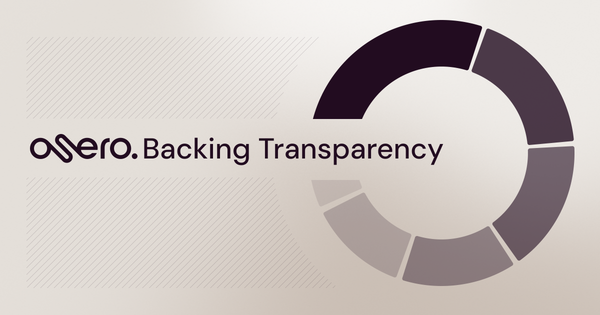
The Sky Savings Rate is real protocol revenue generated by a balance sheet that currently spans over $10 billion in total collateral, across six asset classes:
- USDC stablecoins — 48.8%, held via counterparties such as Coinbase Prime
- Short-duration treasury bills — 17.7%, managed by counterparties including BlackRock and Janus Henderson
- Onchain crypto-backed lending — 16.9%, deployed through Morpho, SparkLend, and Aave/Horizon
- OTC crypto-backed lending — 10.3%, with counterparties including Maple, Galaxy, and Anchorage Digital
- AAA corporate debt — 4.7%, through BNY Mellon and Janus Henderson
- Private credit — 0.3%, through Apollo
This diversified structure means the yield is not reliant on any single source, and risk is spread across a mix of traditional and onchain instruments managed by specialised actors (called Agents) within the Sky Ecosystem.
When a user deposits a stablecoin through Osero Earn, it is routed through Sky's Peg Stability Module to mint USDS, which is then deposited into the ERC-4626 sUSDS vault. The vault continuously accrues the Sky Savings Rate. When the user wants to exit, the process runs in reverse: sUSDS is redeemed back to the user's original stablecoin, plus all accrued yield. There are no lock-ups, no withdrawal queues, and no exit fees.
Liquidity and capital protection
Two questions matter most to any platform evaluating a savings product for their users: can users get their money back when they want it, and what happens if something goes wrong?
Liquidity
The full liquidity of the Sky Savings Rate is structural, not a promise. Sky Protocol maintains what it calls Actively Stabilising Collateral, a pool of highly liquid assets held specifically to ensure that redemption demand can always be met. This pool has two tiers: cash stablecoins held directly in reserve and redeemable immediately with no market impact, and liquid onchain money market positions (in protocols like Morpho, SparkLend, and Aave Horizon) that can be exited rapidly with minimal price impact.
Currently (as of May 2026) at $4.9 billion against a total USDS supply of $10.3 billion, this buffer means that even under elevated redemption pressure, the protocol has substantial capacity to honor withdrawals from immediately accessible reserves before needing to touch longer-duration allocations.
Capital protection
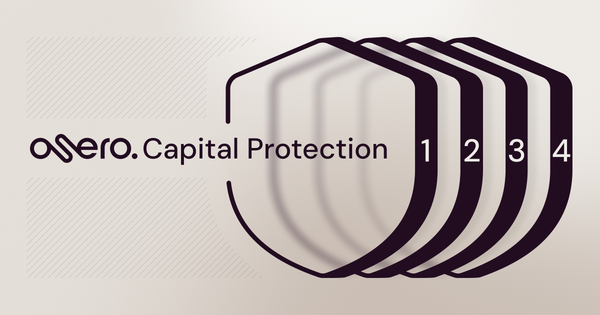
Sky Protocol's risk management framework is inspired by Basel III, the same international standard that governs capital adequacy at traditional financial institutions. The structure is a two-tier loss-absorption stack.
Agents within the Sky Ecosystem borrow USDS to deploy capital across approved strategies. In exchange, they are required to hold Junior Risk Capital proportional to the risk of each underlying investment. This is the first capital to absorb losses in the event of a position impairment, creating strong incentive alignment: Agents bear the first loss and are therefore economically motivated to manage risk carefully.
Above that, Sky Protocol itself holds Backstop Capital as a further protection for users. A loss would need to exhaust both the Agent's junior capital and Sky Protocol's backstop capital before it could reach depositors. This is a meaningfully higher barrier than any other DeFi yield product provides.
Built-in transparency
For platforms serving retail or institutional users, trust is the product. Users need to know what backs their deposits, how liquid the underlying positions are, and what protections exist if things go wrong. Osero Earn makes this answerable in real time.
The Transparency SDK is a suite of live, auditable data feeds that platforms can embed directly into their own product UI without data infrastructure required. It covers three areas:
- Position Monitoring surfaces a live view of the entire balance sheet backing the Sky Savings Rate. Each position includes its NAV, annualised yield, risk capital requirements, a plain-language explanation of how returns are generated, and links to the underlying asset issuer documentation.
- Liquidity distinguishes in real time between idle stablecoins that are immediately redeemable and onchain DeFi positions that can be liquidated with no price impact, giving users a live view of available liquidity at any moment.
- Risk Capital provides a live breakdown of all junior and senior risk capital by entity, with real-time values and attribution, giving users a clear and auditable view of the loss-absorption structure protecting their deposits.
Together, these feeds give platforms the ability to communicate the quality and safety of the underlying yield to their users at the standard institutional clients and increasingly sophisticated retail users expect.
The Integration SDK
@osero/client is the open-source TypeScript SDK that powers Osero Earn integrations. It provides a single unified API for minting and redeeming sUSDS on every supported chain (Ethereum Mainnet, Base, Arbitrum One, OP Mainnet, and Unichain) abstracting away all chain-specific routing, contract calls, and transaction sequencing.
The SDK is built around three principles. First, actions are pure functions that return an ExecutionPlan — a wallet-agnostic description of the transactions required — before any wallet interaction takes place. Built-in adapters ship for viem and ethers v6, but the plan is plain data, so platforms broadcasting through a relayer, a 4337 bundler, or their own pipeline can write their own send loop. Second, every action returns a fully typed ResultAsync rather than throwing exceptions, making error handling explicit and composable. Third, every action that moves funds has a matching preview helper that returns the expected output amount before any transaction is built or sent, allowing platforms to show users exactly what they will receive before asking them to sign.
On the chain routing side, the SDK handles everything: PSM fee reads, ERC-20 approval management, ERC-4626 vault deposit and redeem logic, multi-step execution sequencing, and balance reads across tokens and chains. On L2 chains, the deposit flow is a simple two-step sequence — one approval and one PSM3 swap delivering sUSDS directly. On Ethereum Mainnet, USDC is first converted to USDS via Sky's UsdsPsmWrapper before being deposited into the sUSDS vault.
Multi-stablecoin deposits are supported via Enso, which handles routing and conversion to USDC/USDS in a single bundled transaction before the sUSDS mint is executed. This means users can deposit from any supported stablecoin on any supported chain without the platform managing any conversion logic.
Get started
Full documentation for Osero Earn is available at docs.osero.org, including the complete SDK reference, installation guide, quick-start examples, and the Transparency SDK specification. If you are evaluating Osero Earn as a distribution partner, start with the product documentation. If you are a developer ready to build, installation and a working integration can be live in under an hour.